Showing posts with label Jennifer Britton. Show all posts

Wednesday, January 29, 2014

Leadership a-z: T is for Time Management


Doing more with less is a key mantra of today’s business context. At the same time, most of us are
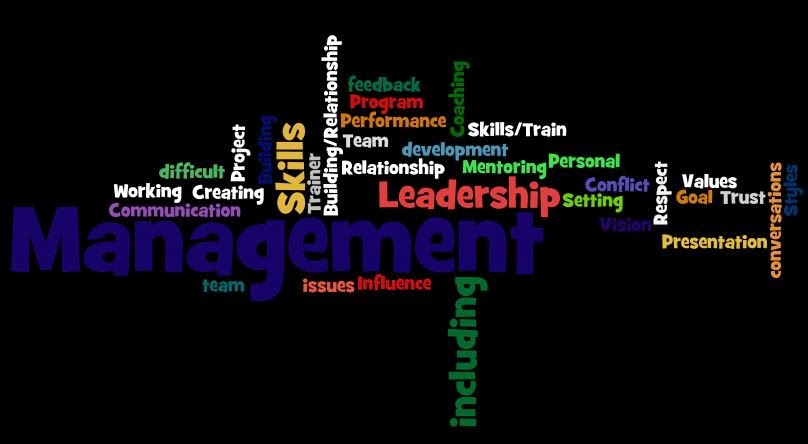
Time Management Wordle - Jennifer Britton, 2014
inundated with email.

Consider these factoids:

  • Managers may spend up to 40% of their time in managing email - more than 2.5 or 3 hours a day (hamsterrevolution.com)
  • You may face up to 56 interruptions per day (read the article from Wendy Cole in Time)
  • Information overwhelm - Today an issue of the New York Times contains more information than the average person was likely to encounter in their lifetime during the 17th century (Elaine Biech, 2007)


What are the implications for leaders? A constant barrage of information and communication, and the potential to quickly become overwhelmed with information and communication.

Today’s post provides four tips for time  management:
1. Know where your time actually goes. A lot of us “think” we know where we spend our time, when in fact it many not be representative of really where our time is being spent. A tool I share with leaders I coach is the Time Tracker. For the span of a week (or longer if your schedule varies greatly) track where your time is going. It may be useful to do this in 15 or 30 min increments. Electronically or on paper, note each block and categorize it into common categories (meetings, commuting, email, time with staff, reporting, relationship management etc). At the end of the week, summarize where you have spent your time.
As you review your schedule that week ask yourself:

  • What do you notice?
  • Where are you spending the bulk of your time?
  • What results are you getting from this? (Consdier the 80/20 rule in this context)
  • What changes are needed to support you in maximizing your productivity?


2. Prioritize - In a recent post, Leadership A-Z p is for prioritization, I shared four tools for prioritization. We have a fixed amount of time, so it is important to consider what really key in our work. The four tools I explored in the post include:
1. The Urgent/Important Matrix
2. the 80/20 Rule
3. Prioritization Matrix
4. Strategic Issues Mapping

These tools may be useful in supporting you towards more effective time management

3. Delegate - Delegation is critical for any leader’s success. Taking a look at your priorities, what are the things you really need to do and what can be handed off to others.
A recent blog post addressed the topic of delegation - which you can read here.
What tasks do you want to delegate?
 
4. Manage Interruptions: 
  Every time we get interrupted we need to stop what we are doing, refocus, and then start up again. We often don’t factor in the cost of “start up” again. While we may not be able to completely erase interruptions, we are able to manage them more effectively.

Some possible options for managing interruptions include:
- Keep an interruption log - like your time in general, where do your intrruptions come from. Which ones are “really important, and couldn’t be handled any other way”
- Create a dedicated focus time - this may require a change to the way you work. What time of day could you “close your door” for a centralized focus time. Communicating this time to other team members, or instituting it organization wide, can support more focused work, which may in fact shorten the time it takes you to get things done.
- Schedule times when you will check email and/or the phone. Depending on your role, email may be a constant interruption. It may be useful to experiment with creating dedicated email time, and turning it off at others. Communicate this to others so that they are aware that you will not be available or online at certain times.

A 2005 article by Spirex and Feintuch of BASEX estimates that interruptions consume 28% of a “knowledge workers” day, a cost of $588 Billion a year in the US (estimating a 28 Billion lost person hours and a cost per hour of $21/per worker). You can link to their article here.

Consider these questions:
What is the cost of interruptions in your day? 
Which type of interruptions do you face?
What approaches can you use to minimize interruptions?

Which of these four areas is priority for you? What resources would you recommend to others?

Best wishes,
Jennifer


Jennifer Britton, MES, CPT, PCC
Potentials Realized
Author of Effective Group Coaching and From One to Many: Best Practices of Team and Group Coaching (Jossey-Bass, 2013)
Phone: (416)996-TEAM
Learn more about our retreat and leadership development offerings and support 

Visit our daily tips for teams and team leaders at the Teams 365 blog
 
As an author Jennifer Britton is known for her thought leadership in the area of group and team coaching. She is also a former leader and team builder who spent the first 13 years of her career working within the United Nations as well as the international aid sector. From Boardroom to jungle, beach and forest to mountains, Jennifer has worked to develop teams and leaders in more than 18 countries, and virtually many more. She founded Potentials Realized in 2004 and focuses on leadership, teamwork and coaching skills training.


Tuesday, January 07, 2014

Leadership a - z : O is for Optimism and Opportunities

Today's leadership a-z post takes us to the letter o.  Opportunities and optimism were two words that came to mind as I reflected on some of the most powerful leaders I've worked with in the international sector, as well as here, closer to home.


In today's business context it is easy to get lulled into the belief that everything is going poorly. Leadership plays a key role in encouraging their teams to find and sometimes create opportunities.

Optimism is one of the 21 competencies which make up Emotional Intelligence. As research continues to point to, the higher up we move in leadership, the more important our non-technical skills become, like building relationships, managing our emotions, and knowing ourselves. These are all part of the EI framework.

As Daniel Goleman writes in Primal Leadership,

"A leader who is optimistic can roll with the punches, seeing an opportunity rather than a trheat in a set back. Such leaders see others positively, expecting the best of them. An their "glass half full" outlook leads them to expect that changes in the future will be for the better" (Primal Leadership, pp 252).

Part of the skill set of optimism is about being aware of our perspectives around situations and being able to "reframe" how we see these. "Reframing" is a valuable skill, and moves us from a pollyanna-ish outlook where everything is great, to an acknowledgement of the current context, and a reframe in terms of how to view it.

Reflection Questions:
What is your current outlook towards business challenges you are facing?
What opportunities exist?
What topics/isues would benefit from you reframing?

Have a great week,
Jennifer

Jennifer Britton, MES, CPCC, CPT
Potentials Realized
Team and Leadership Development | Coaching | Retreats

Friday, December 06, 2013

Leadership a-z - L is for Learning

Learning is an integral part of the leadership process. Learning may happen formally and informally, Informally through action, conversations with mentors, our bosses. Formally we may be exposed to formal leadership training and undertake skill development around some of the core leadership skill areas (discussed earlier at this leadership a-z blog post).

I regularly speak on the different modalities of learning and some of the distinctions between Supervision, Coaching, Mentoring and Training. This stems from my own experience as a senior leader working in the domains of coacing, mentoring and training. As a consultant and leadership coach today, I continue to work with partner organizations across these varied disciplines.

My latest book, From One to Many: Best Practices of Team and Group Coaching, addresses the topic of leadership capacity development, and learning in part 3 of the book.

The following Iconograph comes from ASTD's 2013 State of the Industry report:


Coaching Questions:
* How much time have you dedicated to learning this year - for you? For your team?
 Which skill areas could you benefit from sharpening or learning more about?
* What do you find you need the most useful - Formal learning opportunities? Informal learning opportunities? Support from peers or others in your industry? Mentoring?

* What one learning activity would have the greatest impact to your work, and your life, in the next year?

Have a great week,
Jennifer

Jennifer Britton, MES, CPT, PCC
Potentials Realized
Author of Effective Group Coaching and From One to Many: Best Practices of Team and Group Coaching (Jossey-Bass, 2013)
Phone: (416)996-TEAM
Read more about our coaching, retreat and leadership development offerings and support
 
As an author Jennifer Britton is known for her thought leadership in the area of group and team coaching.  She has spent the last 25 years supporting teams and groups real their full potential. She is also a former leader and team builder who spent the first 13 years of her career working within the United Nations as well as the international aid sector. From Boardroom to jungle, beach and forest to mountains, Jennifer has worked to develop teams and leaders in more than 18 countries, and virtually many more. She founded Potentials Realized in 2004 and focuses on leadership, teamwork and coaching skills training/

Wednesday, November 27, 2013

Just-in-time: Leadership a - z is j

Today's leadership a through z is about Just-in-time. So much of today's business context makes just-
Wordle created at Wordle.com, Britton, 2013
in-time approaches so valuable -

Just-in time coaching
Just-in-time feedback
Just-in-time training

What words come to mind when you think of "just in time"?

For myself, words such as:
Immediate
In the moment
Specific
Informal
and Focused spring to mind

Immediate feedback and support is important for people to be able to access information right now, in the moment and not six months later or a year later at the performance review process. As leaders we often fall into the trap of thinking that it's going to take a lot of time, when in fact, it doesn't.

What immediate feedback/support/coaching/feedback can you provide right now to your team members? How much time would this really take?

Just in time approaches are very specific, tailored, targeted and focused. If we look to just-in-time warehousing approaches that retailers like Walmart and Canadian Tire have based much of their inventory process on, orders are place when needed, and for specific items. In translating this to the leadership realm, what specific, focused and targeteted feedback do you need to offer to each team member, right now?

Just in time approaches to training or coaching often are more informal. In the moment training can be invaluable, to solve or address an issue right away, rather than when training can be scheduled. This then becomes a more proactive approach to development, enabling "course correction" along the way.

What are the tools you have at your fingertips right now to support you in these conversations?

What other qualities come to mind when you think of just-in-time?

With best wishes,
Jennifer

Jennifer Britton, MES, PCC, CPCC
Potentials Realized - Leadership, Retreats, Team Development
 Jennifer Britton, PCC, CPCC
Author of Effective Group Coaching and From One to Many: Best Practices of Team and Group Coaching (Jossey-Bass, 2013)
Phone: (416)996-TEAM

As an author Jennifer Britton is known for her thought leadership in the area of group and team coaching. She is also a former leader and team builder who spent the first 13 years of her career working within the United Nations as well as the international aid sector. From Boardroom to jungle, beach and forest to mountains, Jennifer has worked to develop teams and leaders in more than 18 countries, and virtually many more. She founded Potentials Realized in 2004 and focuses on leadership, teamwork and coaching skills training.


Monday, November 25, 2013

Ideas for Your Year End Retreat Processes - Leadership a-z is I

Year end team building or retreat programs can be a great idea, but often are not as leveraged as they
SWOT Planning - Photo Britton
could be. If you are planning a year end retreat, here are some things to consider:

1. What's the purpose? What's the purpose of the program? To start building connection amongst team members, to undertake some strategic planing or goal setting for the next year? To build skills in areas such as conflict resolution? To get to understand each other better? These areas are not exclusive to each other, however, you will want to be clear in your engagement of a facilitator what's the focus and what emphasis do you want to place?

2. What's the follow-up? Many great ideas are left at the retreat site. Build into your 2014 programming time to revisit and follow-up on your retreat learning, actions and commitments. When do you want to schedule a follow-up to continue the conversation?

3. What venue will be conducive to your event? Event venues can range from boardrooms, to specific retreat sites. What location will be conducive to your team? What is the environment you want to create? How easy will it be for participants to get to and from the venue? What transportation and other office arrangements need to be made so everyone can "leave" the office for the day?

4. What type of activities do you want to include? The range of activities offered in today's retreat programs can vary from ropes-courses to strategic planning. How active do your staff expect to be? What are the three or four main areas you'd like to include in a day long program? Looking back at the purpose of the program, where would you like to place the main emphasis?


For more tips and ideas for your retreat programming, you may want to read an article I wrote years ago entitled "Six Essential Design Principles for Your Corporate Retreat" here.

Wishing you a successful retreat process!

With best wishes,
Jennifer

Jennifer Britton, PCC, CPCC
Author of Effective Group Coaching and From One to Many: Best Practices of Team and Group Coaching (Jossey-Bass, 2013)
Phone: (416)996-TEAM
Read more about our retreat and leadership programming

As an author Jennifer Britton is known for her thought leadership in the area of group and team coaching. She is also a former leader and team builder who spent the first 13 years of her career working within the United Nations as well as the international aid sector. From Boardroom to jungle, beach and forest to mountains, Jennifer has worked to develop teams and leaders in more than 18 countries, and virtually many more. She founded Potentials Realized in 2004 and focuses on leadership, teamwork and coaching skills training

Monday, November 11, 2013

Leadership A-Z: F is Frameworks for High Performing Teams - NaBloPoMo

A large part of my work with organizations of all sizes (non-profit, SMEs, governmental agencies and
corporate) revolves around creating the conditions for more effective team work, usually through a mix of coaching, training and other performance improvement support.  Whether I am working with a team in a one day team building offsite, or having sustained conversations over the period of months, I like to share the following definitions. First, what is a team?

 In the Wisdom of Teams, Kazenbach and Smith offer us this definition " “... a team is a small number of people with complementary skills who are committed to a common
purpose, performance goals, and approach for which they hold themselves mutually accountable” (p 45).

A framework I usually share, and get leaders and team members to rate themselves, are the six factors of High Performing Teams. Katzenbach and Smith found that High Performing Teams have:


  1. Shared purpose or mission
  2. Shared performance goals
  3. Shared behavioral norms
  4. Shared team practices
  5. Shared Commitment
  6. Clear Roles


Coaching Questions:
1. On a scale of 1-10 (with 1 being low, and 10 being high) where do you rate yourselves in each one of these six areas?
2. Which ones are your strengths? What can you do to leverage these?
3. Which ones are your weak areas?
4. What are some specific action steps you can take to address areas which you have a lower score. If roles are not clear, what could you do to clarify them? If performance goals are not clear, what needs to be done?
5. Who needs to be involved in these dialogues?
6. When do they need to happen?

Interested in finding out about what your team can do to address these? Please contact me or refer to the chapters on team coaching in my latest book - From One to Many: Best Practices for Team and Group Coaching.

Have a great week,
Jennifer


Jennifer Britton, MES, PCC, CPT
Potentials Realized
Phone: (416)996-TEAM
Supporting leaders and teams through enhanced skills, better conversations and focused performance
Author of Effective Group Coaching (Wiley, 2010) and From One to Many: Best Practices for Team and Group Coaching (Jossey-Bass, 2013)


As an author Jennifer Britton is known for her thought leadership in the area of group and team coaching. She is also a former leader and team builder who spent the first 13 years of her career working within the United Nations as well as the international aid sector. From Boardroom to jungle, beach and forest to mountains, Jennifer has worked to develop teams and leaders in more than 18 countries, and virtually many more. She founded Potentials Realized in 2004 and focuses on leadership, teamwork and coaching skills training.

Did you find this post useful and want to share it? Please do so by linking and attribution. Thank you! 


Saturday, November 09, 2013

Styles and Teamwork - NaBloPoMo 9

What your style preferences in working and communicating? Do you see the world in broad strokes or fine detail? In a majority of the team and leadership programs I develop with clients we often wind up spending a significant amount of time exploring styles, and how they contribute to what's working, and what's not working within teams, decision making, and communication. A lot of teams find that using an assessment such as the Everything DiSC(R) or the Team Diagnostic as a foundation for our team buiding or team coaching work, creates a common foundation and language to start the dialogue and understanding needed.

I wanted to share one of the weekly tips on teamwork which are posted over at our  Potentials Realized Facebook page in today's blog post:
Photo: Week 22 question for leaders and #teams. How are styles enhancing the conversation on your team? How are they getting in the way. Contact us today for more information on Everything DiSC asessments - Workplace, Sales, Management, Work of Leaders, and the 363 for Leaders.


 Coaching Questions:
What is your style as a leader? How does this influence your communication, leadership and conflict management approach?
What styles exist in your team?
Given these styles, what are the needs and preferences of your team members? Hpw do they approach communication, work and conflict management?

Have a great weekend,
Jennifer

Jennifer Britton, MES, PCC, CPT
Potentials Realized

Potentials Realized
Supporting leaders and teams through enhanced skills, better conversations and focused performance
Author of Effective Group Coaching (Wiley, 2010) and From One to Many: Best Practices for Team and Group Coaching (Jossey-Bass, 2013)


As an author Jennifer Britton is known for her thought leadership in the area of group and team coaching. She is also a former leader and team builder who spent the first 13 years of her career working within the United Nations as well as the international aid sector. From Boardroom to jungle, beach and forest to mountains, Jennifer has worked to develop teams and leaders in more than 18 countries, and virtually many more. She founded Potentials Realized in 2004 and focuses on leadership, teamwork and coaching skills training.

Did you find this post useful and want to share it? Please do so by linking and attribution. Thank you!

Thursday, November 07, 2013

Leadership a-z: D is for Delegation NaBloPoMo 7

Today's leadership a-z post is about Delegation. Not a leadership training program goes by without someone asking about how to delegate more effectively.


In starting to think about delegation and what we can delegate, we can apply the 5 Ws to Delegation:

What - What do you want to delegate? What are the specifics? What resources do they need to complete this?
Who - Who will you delegate to? Do they have the skills required? What support do they need along the way?
When - What are the major milestones along the way? How will you check in, and when?
Why - Why is this task important? Have you communicated the big picture?
Where - Where does the work need to take place?
How - What are the steps/actions required? How will it be measured? How will you all know it has been successful?

A lot of leaders fall into the trap of either not delegating and doing it all themselves. What is the cost of this? On the flipside, some leaders may over delegate, wondering why things are not done right. Often the questions flowing out of the 5 Ws have not been taken into account. Perhaps the person does not have the skills or resources to do the work, or maybe the authority to make it happen. Perhaps they've gotten things done, but there have been no checkpoints, so the actions taken really weren't the ones needed.

Coaching Questions:

What do you want to delegate?
Why is it important?
How will you communicate this to your staff?
When will you check in?

Have a great week,
Jennifer

Jennifer Britton, MES, PCC, CPT
Potentials Realized

Potentials Realized
Supporting leaders and teams through enhanced skills, better conversations and focused performance
Author of Effective Group Coaching (Wiley, 2010) and From One to Many: Best Practices for Team and Group Coaching (Jossey-Bass, 2013)


As an author Jennifer Britton is known for her thought leadership in the area of group and team coaching. She is also a former leader and team builder who spent the first 13 years of her career working within the United Nations as well as the international aid sector. From Boardroom to jungle, beach and forest to mountains, Jennifer has worked to develop teams and leaders in more than 18 countries, and virtually many more. She founded Potentials Realized in 2004 and focuses on leadership, teamwork and coaching skills training.

Found this post useful and want to share it? Please do so by linking and attribution. Thank you!

Wednesday, November 06, 2013

Leadership a-z: C is for Core Leadership Skills - NaBloPoMo 6

Created at Wordle.com
Today's journey through leadership takes us to C for Core skills of leadership. The design and facilitation of leadership training has been a core focus of my work, with individuals as well as teams since opening
the doors of my company Potentials Realized back in 2004.

Regardless of industry I've worked in, or in my former life as a leader within the UN, what country I worked in, core skills of leadership are global.

Yes, the terms we use may change with time, however, open any leadership book, participate in any leadership development initiative, and you are likely to focus on many of these core skills:

- Communication Skills (including feedback and difficult conversations)
- Coaching and Mentoring Skills
- Influence
- Relationship Building/Relationship Management
- Team Leadership including team development issues
- Project Management or Program Management
- Presentation Skills/Train the Trainer
- Leadership and Personal Styles
- Building Trust and Respect
- Performance Management
- Goal Setting
- Creating a Vision, Working with Values
- Conflict Management

What other skills would you include in a core leadership foundation?

Coaching Questions/Assignment:
Rate yourself on a scale of 0-10 on each one of these leadership areas. What is your skill level in each area? What do you notice about your strengths?
Which areas need attention?
What could you do to develop in these areas - training, coaching, mentoring?


With best wishes,
Jennifer

Jennifer Britton, MES, CPT, PCC
Potentials Realized
Building Leaders and Teams through Coaching, Training and Retreats
Author of Effective Group Coaching (Wiley, 2010) and From One to Many: Best Practices for Team and Group Coaching (Jossey-Bass, 2013)


As an author Jennifer Britton is known for her thought leadership in the area of group and team coaching. She is also a former leader and team builder who spent the first 13 years of her career working within the United Nations as well as the international aid sector. From Boardroom to jungle, beach and forest to mountains, Jennifer has worked to develop teams and leaders in more than 18 countries, and virtually many more. She founded Potentials Realized in 2004 and focuses on leadership, teamwork and coaching skills training.

Found this post useful and want to share it? Please do so by linking and attribution. Thank you!